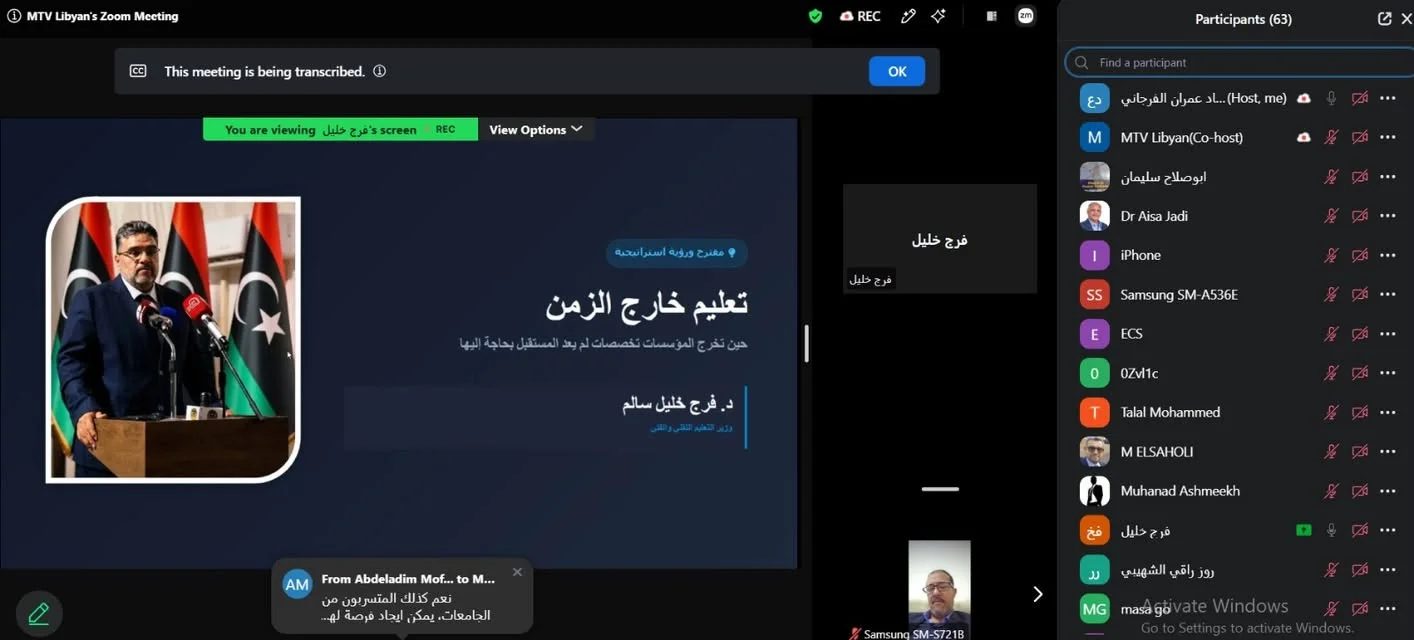
As part of ongoing efforts to develop the technical and vocational education system and strengthen the alignment of its outcomes with labor market needs, a virtual panel discussion was held via Zoom on Sunday evening, November 1, 2026, under the title:
“Technical and Vocational Education: Between Present Demands and Future Challenges”
The session featured the participation of His Excellency Dr. Faraj Khalil Salem, Minister of Technical and Vocational Education, alongside a distinguished group of experts and specialists:
- Eng. Matouq Mohammed Matouq
- Dr. Issa Saeed Al-Jadi
- Mr. Ali Salem Al-Sahouli
The session was moderated by Dr. Ayad Omran Al-Farjani, who also facilitated the discussions.
The three-hour panel featured extensive academic and professional discussions addressing the current state of technical and vocational education in Libya, the challenges facing its development, and strategies for adapting to technological advancements and evolving labor market requirements.
The discussions also addressed several important issues, including reviewing educational specializations and modernizing curricula, the importance of establishing a Labor Market Observatory to support strategic planning and informed decision-making, strengthening practical training opportunities, improving graduate employability, and examining previous experiences in vocational training.
The session witnessed active engagement from attendees, whose contributions, questions, and suggestions enriched the discussions and encouraged the exchange of perspectives and ideas regarding the future of technical and vocational education in Libya.
Sincere gratitude and appreciation are extended to His Excellency the Minister, the distinguished experts and panelists, and all attendees and participants for their valuable contributions and constructive engagement in making this dialogue a success.
It is hoped that such discussions will contribute to developing practical visions and recommendations that support the advancement of technical and vocational education institutions, improve educational outcomes, and ensure greater alignment with labor market demands and Libya’s broader development priorities.